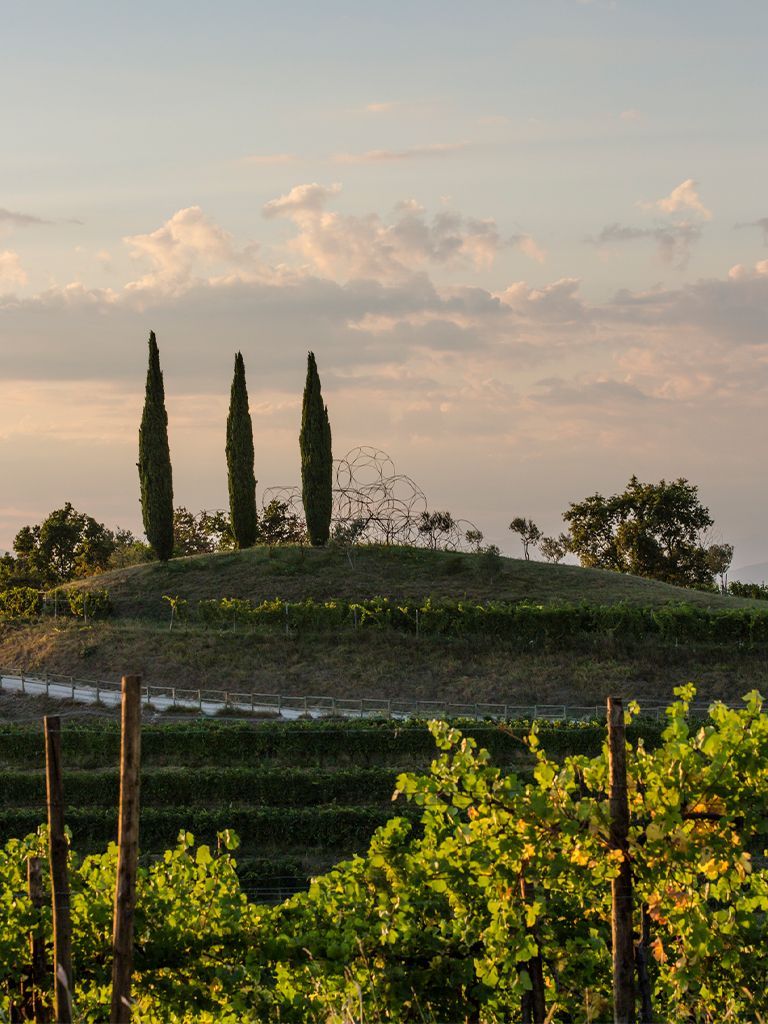

Livio FellugaRosaciusAn ancient tradition tells us that the origin of the place name Rosazzo is in the rose bushes that have grown there since time immemorial. The earliest sources mention Rosacius, Monasterium Rosacensis, Colles totius Montis Rosacensis (the hills of all the Mount of Rosazzo) – and even Monasterium rosarum (the monastery of the roses) all names that refer to rose bushes growing at the ends of the rows of vines.
Inside the Church, there are frescoes of red and white roses painted by Francesco Torbido in 1535. A 15th-century sculpted rose also features in the coat of arms of the Chapter Room, where it is bracketed between two keys which symbolise the offices of Lordship and Governorship of fortified sites. Today, the coat of arms is the logo of the abbey foundation, the Fondazione Abbazia di Rosazzo. Along the perimeter walls of the Abbey of Rosazzo, and in its smaller hanging garden, there is a wide range of roses ancient and modern, including the “Rosazzo rose”, a special variety of wild rose rediscovered in France, where Friulian emigrants planted it in 1925 and which blooms even in winter in the very special site climates of the Rosazzo hills. The Abbey is surrounded by long-established rose gardens where innumerable varieties of roses grow, including the very ancient Rosa Gallica Damascena, the Rosa Bracteata (1793) and the Bracteata Mermaid (1917). The gardens form a route illustrated by a wealth of explanatory labels and the Rose Path, offering views of the vineyards and valley below. |